Cataracts: early symptoms and when to consider treatment

Estimated reading time 4 minutes
Cataracts are one of the most common age-related eye conditions. They develop gradually and, in most cases, can be treated very effectively once they begin to affect everyday vision.
Many people associate cataracts with severe vision loss, but the early stages are often subtle. Changes can build slowly, making them easy to overlook at first.
Regular eye tests are the most reliable way to detect cataracts early and monitor how they progress over time.
What cataracts actually are
A cataract occurs when the natural lens inside the eye becomes cloudy.
In a healthy eye, the lens is clear and helps focus light onto the retina. With a cataract, this clarity reduces, and light is scattered rather than sharply focused.
This leads to vision that can appear:
- blurred or hazy
- dull or less vibrant
- affected by glare or brightness
Cataracts usually develop gradually, often over several years.
Early symptoms people often notice
In the early stages, cataracts do not cause sudden vision loss. Instead, people tend to notice small changes that become more obvious over time.
Common early symptoms include:
- blurred or misty vision
- increased sensitivity to light
- glare or halos around lights, especially at night
- colours appearing faded or yellowed
- needing brighter light for reading
- frequent changes in glasses prescription
Night driving is often one of the first situations where cataracts become noticeable. Headlights can appear more intense or cause glare. This guide explains when night driving issues may indicate a need for an eye test.
Why symptoms are often gradual
Cataracts develop slowly, and the brain adapts to changes in vision.
Because both eyes are rarely affected at exactly the same rate, one eye can compensate for the other. This can delay how quickly changes are noticed.
As a result, some people only become aware of cataracts during a routine examination, even if their vision has been changing over time.
If you are unsure what checks are involved, this explains what happens during an eye test.
Who is more likely to develop cataracts
Cataracts are most commonly linked to ageing, but several factors can increase the likelihood of developing them.
These include:
- age over 60
- diabetes
- long-term exposure to sunlight
- smoking
- previous eye injury or surgery
- certain medications, such as steroids
Even without risk factors, cataracts can still develop as part of the natural ageing process.
How opticians detect cataracts
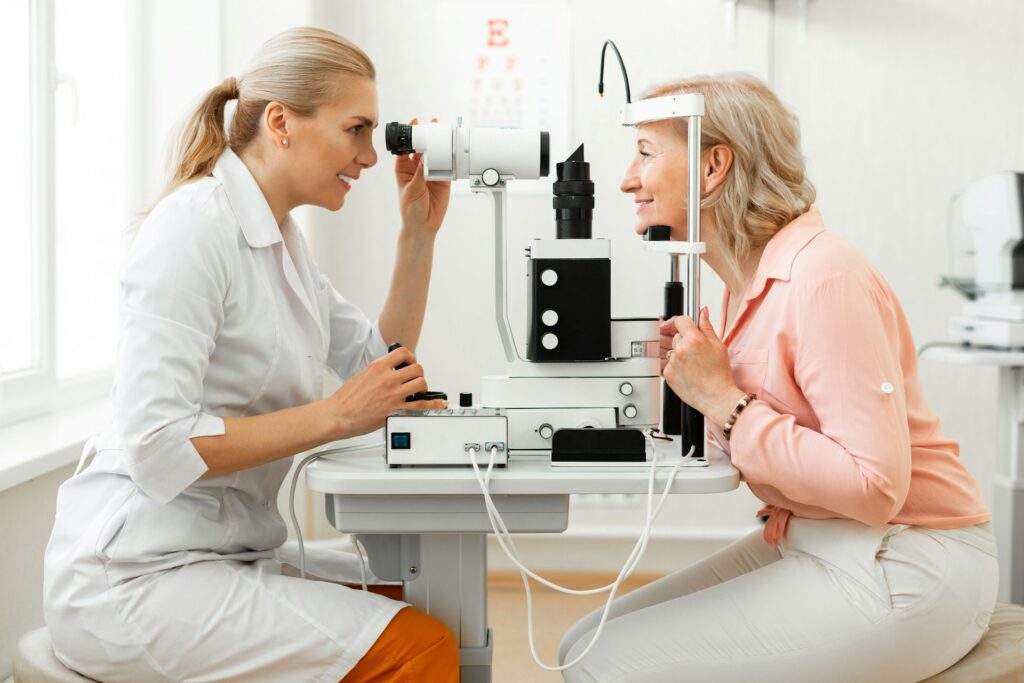
Cataracts are usually identified during a routine eye examination.
An optician will:
- examine the lens inside the eye
- assess clarity and light transmission
- check visual acuity and prescription changes
These checks are quick and painless. Cataracts are often detected before they significantly affect day-to-day vision.
Regular testing ensures any changes are tracked over time. If you are unsure how often to attend, this guide explains how often you should have your eyes tested.
When cataracts start to affect daily life
In the early stages, cataracts may only cause minor inconvenience.
Over time, they can begin to affect everyday activities such as:
- reading
- driving, particularly at night
- recognising faces
- working on screens
When these changes start to interfere with daily life, treatment may be considered.
When to consider treatment
Cataract treatment is typically recommended when vision changes begin to impact quality of life.
The standard treatment is cataract surgery, which involves replacing the cloudy lens with a clear artificial lens.
This is one of the most common and successful procedures performed in the UK.
Treatment is not always immediate. Many people live with early-stage cataracts for years before surgery becomes necessary.
Cataracts and your prescription
A common early sign of cataracts is frequent changes in glasses prescription.
Some people notice that their glasses no longer feel quite right, even after relatively recent updates. This can be due to changes in how light passes through the lens.
If you have experienced repeated prescription changes, this guide explains what your eye test prescription means.
When to arrange an eye test
You should arrange an eye test if:
- your vision has become blurred or hazy
- lights appear brighter or cause glare
- colours seem less vivid
- your prescription has changed more frequently
- it has been more than two years since your last test
Cataracts develop gradually, but early detection allows you to monitor changes and decide on treatment at the right time.
You can book an eye test in Barking to check your vision and discuss any concerns.
Routine eye examinations help detect cataracts early and ensure your vision remains clear, comfortable, and well supported over time.