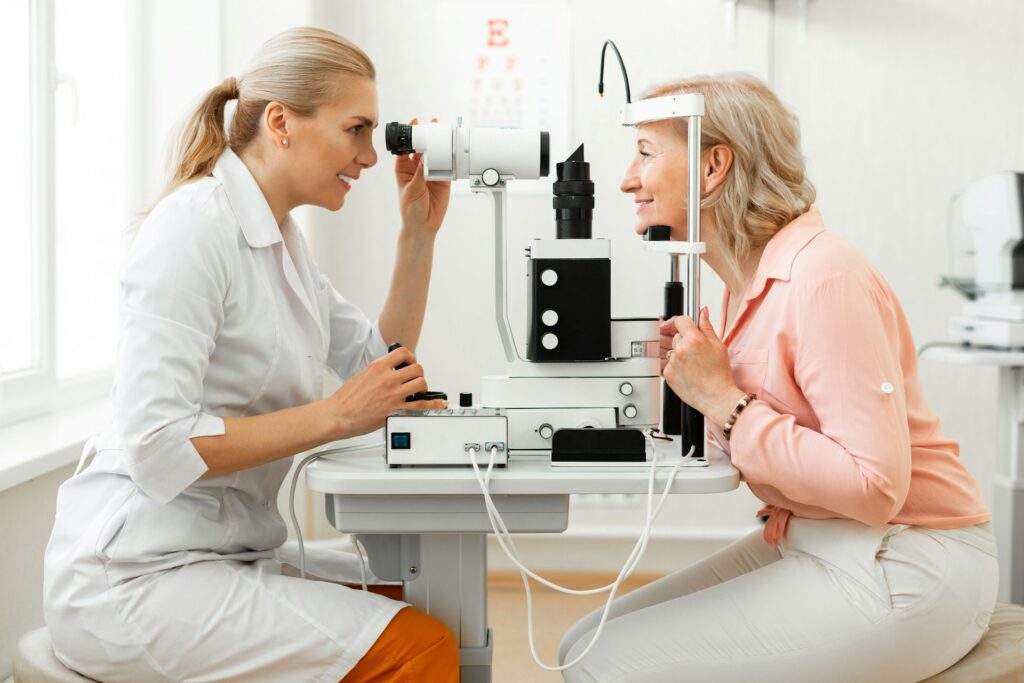
Early signs of glaucoma: what to watch for and when to get checked

Estimated reading time 5 minutes
Glaucoma is one of the most common causes of preventable sight loss. The difficulty is that it often develops slowly and without obvious symptoms in the early stages. Many people assume their vision is fine until changes become noticeable.
Regular eye tests are the main way glaucoma is detected early. During an eye examination, opticians look for subtle changes inside the eye long before vision is affected.
This guide explains what glaucoma is, the early warning signs people sometimes notice, and why routine checks remain the most reliable way to catch it early.
What glaucoma actually is
Glaucoma refers to a group of conditions that damage the optic nerve, the structure that carries visual information from the eye to the brain.
In many cases, the damage is linked to increased pressure inside the eye. Over time, this pressure can affect the optic nerve and gradually reduce the field of vision.
The key challenge is that glaucoma often progresses quietly. Vision in the centre of the eye may remain clear while subtle loss develops at the edges.
Because these changes are gradual, many people do not realise anything is happening.
Why glaucoma often has no obvious symptoms
Unlike some eye conditions, glaucoma rarely causes immediate discomfort.
Early changes usually affect peripheral vision, the part of your sight that notices movement and objects outside the direct line of focus.
The brain adapts surprisingly well to small changes. As a result, people often compensate without noticing.
This is why routine examinations matter. If you are unsure what an appointment involves, this guide explains
what happens during an eye test and how opticians assess eye health.
Subtle signs that sometimes appear
Although glaucoma often develops without symptoms, some people do notice small changes.
These may include:
- gradual loss of peripheral vision
- difficulty seeing objects to the side
- increased difficulty with night driving
- halos around lights in some cases
- eye discomfort or headaches (less common)
Night-time glare can have several causes, including prescription changes or dry eye. If driving at night has become more difficult, this guide explains when night driving problems may signal a need for an eye test.
The important point is that symptoms alone are not a reliable indicator. Many people with early glaucoma feel no difference at all.
Who is more likely to develop glaucoma
Certain factors increase the likelihood of glaucoma developing.
These include:
- age over 40
- family history of glaucoma
- African or Caribbean heritage
- high eye pressure
- diabetes or other health conditions affecting circulation
Family history is particularly important. If a close relative has glaucoma, regular eye tests become even more important.
If you are unsure how often checks are recommended, this explains how often you should have your eyes tested.
How opticians detect glaucoma
Glaucoma detection does not rely on a single test. Several checks are combined to build a picture of eye health.
During a routine eye examination, an optician may:
- measure pressure inside the eye
- examine the optic nerve
- assess peripheral vision
- look for structural changes inside the eye
These checks are quick and painless. Most people do not notice anything unusual during the process.
Because these tests are part of a standard examination, glaucoma can often be identified before vision is affected.
Why early detection matters
Glaucoma damage cannot be reversed. However, if detected early, treatment can slow or stop progression.
Treatment usually involves medicated eye drops that reduce pressure inside the eye. In some cases, laser treatment or surgery may be recommended.
The goal is simple: protect the optic nerve before permanent damage occurs.
This is why regular eye examinations remain the most effective safeguard.
Glaucoma and everyday vision
People sometimes assume that if they can read clearly or use screens comfortably, their eyes must be healthy.
Clear central vision does not rule out eye disease.
Some individuals only discover glaucoma during routine testing when their eyesight appears otherwise normal. If you have ever wondered whether testing is necessary when vision feels fine, this article explains why eye tests are still important even without symptoms.
Preventative care often works quietly in the background.
When to arrange an eye test
You should arrange an eye test if:
- you are over 40 and have not had a recent check
- you have a family history of glaucoma
- you notice changes in side vision or night driving
- it has been more than two years since your last examination
Early detection gives the best chance of protecting vision long-term.
If you would like to arrange a check, you can book an eye test in Barking at a convenient time.
Regular eye tests do more than update prescriptions. They quietly monitor eye health and help detect conditions like glaucoma before they affect everyday life.